
Starting a fish farm can look simple: prepare a pond, release fingerlings, provide feed, and harvest the fish. In practice, successful fish farming requires careful decisions about species, water quality, stocking density, feeding, fish health, and marketing.
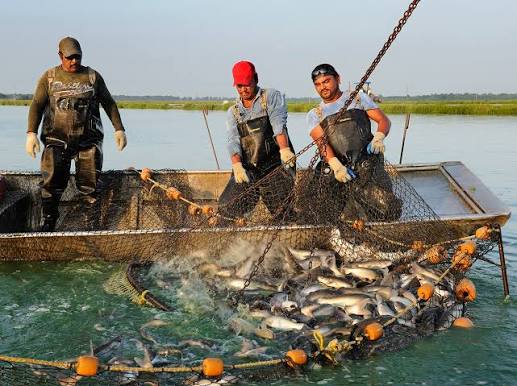
For beginners, the biggest mistake is focusing only on how many fish they can produce. A profitable farm must also control feed costs, reduce mortality, maintain suitable water conditions, and sell fish at the right time. In Bangladesh, carp-based pond culture is particularly well established, while tilapia, pangasius, and other species are also important in aquaculture systems.
This guide explains the main fish farming methods, suitable species, pond preparation, feeding, water management, costs, profitability, and practical steps for starting a small or commercial fish farm.
What Is Fish Farming?
Fish farming is the controlled raising of fish in ponds, tanks, cages, or other aquatic systems for food, income, or commercial production. Unlike capture fishing, farmers manage important parts of the production process, including stocking, feeding, water quality, fish health, and harvesting.
Fish farming is part of the broader field of aquaculture, which includes the farming of aquatic animals and plants.
The level of management can vary. Extensive systems depend more heavily on natural food in the water, while intensive systems use higher stocking densities, formulated feed, and greater control of water conditions. Bangladesh has a long history of pond-based fish culture and carp polyculture.
Why Is Fish Farming Important?
Fish farming can provide food, employment, and income across the aquaculture value chain. It also allows farmers to produce fish in managed environments instead of depending entirely on wild fish populations.
For small farmers, ponds can become productive assets when they have suitable water, good management, and access to markets. For larger businesses, commercial fish farming can involve hatcheries, nursery operations, grow-out ponds, feed systems, harvesting, transportation, and marketing.
The opportunity, however, comes with risks. Feed prices, disease, poor-quality fingerlings, water-quality problems, weather, and market prices can all affect the final result.
Common Fish Farming Methods
The best farming method depends on available land, water, capital, species, and management skills.
Pond Fish Farming
Pond farming is one of the most familiar methods, especially in freshwater aquaculture. Fish are stocked in an earthen or constructed pond and raised using natural pond productivity, supplementary feed, or formulated feed.
Pond systems can range from relatively low-input farming to intensive production. Semi-intensive systems can offer a practical middle ground because they combine natural productivity with additional feed and management.
Cage Fish Farming
In cage farming, fish remain inside net cages placed in a suitable natural or artificial water body. Water flows through the cage, allowing oxygen and nutrients to reach the fish.
However, cage farming requires careful site selection. Water quality, depth, current, access, security, and environmental conditions all need consideration. Overfeeding can also increase waste and affect the surrounding water body.
Tank Fish Farming
Tank systems raise fish in artificial containers where farmers can exercise greater control over water and feeding.
They can be useful where suitable pond land is unavailable. However, tanks may require pumps, aeration, filtration, electricity, and closer monitoring than traditional ponds.
Biofloc Fish Farming
Biofloc farming uses beneficial microbial communities to help recycle nutrients in the culture water. The system can support relatively high stocking densities.
Biofloc is not a shortcut to easy fish production. It requires reliable aeration, careful feeding, appropriate water management, and close monitoring. A failure in aeration or poor management can quickly create serious problems.
Best Fish Species for Farming
There is no universally best fish species. The right choice depends on water conditions, climate, market demand, feed availability, farming method, and the farmer’s experience.
Tilapia
Tilapia is widely cultured and is attractive to farmers because it can perform well in suitable warm-water systems. Before choosing it, farmers should consider local demand, quality fingerlings, feed costs, and the intended production system.
Rohu
Rohu is one of the important carp species in Bangladesh. Improved rohu strains are also being disseminated through aquaculture genetics programs. WorldFish reports that its genetically improved rohu is widely adopted in Bangladesh.
Catla
Catla is another important carp used in freshwater aquaculture. It is frequently considered as part of carp-based polyculture systems rather than being treated as a universally superior single species.
Mrigal
Mrigal is commonly associated with carp polyculture. Different carp species can occupy different feeding niches within a pond, making polyculture an important farming approach in South Asia.
Pangasius
Pangasius is widely used in commercial aquaculture and can be suitable for intensive production systems. Farmers should consider feed requirements, water management, stocking density, and local market conditions before investing.
Common Carp
Common carp is another adaptable species used in various aquaculture systems. Its suitability depends on local environmental conditions and market demand.
Research on small-scale aquaculture in Bangladesh shows that carp species such as rohu, catla, and mrigal are widely represented across different regions, often alongside species such as tilapia and pangasius.
How to Start Fish Farming Step by Step
Starting a fish farming business requires planning before stocking the first fish.
1. Choose a Suitable Location
Look for reliable water availability, suitable soil, reasonable protection from flooding, and easy access for people and vehicles.
Also consider where you will buy fingerlings and feed and where you will sell harvested fish.
2. Prepare the Pond or Farming System
Inspect the pond before stocking. Repair damaged embankments, remove unwanted obstacles, check water-retention capacity, and make sure water can be managed properly.
The exact fish pond preparation process depends on the pond’s previous use, soil, water source, and species.
3. Test and Manage Water Quality
Water quality directly affects fish growth and survival.
Important factors include:
- Dissolved oxygen
- pH
- Temperature
- Ammonia
- Water clarity and general condition
Farmers should not judge water quality only by its appearance. Water-quality monitoring becomes increasingly important as fish biomass and feeding intensity increase. Bangladesh-focused guidance emphasizes understanding and managing the pond’s oxygen balance as production intensifies.
4. Choose Healthy Fingerlings
Buy fingerlings from a reliable hatchery or supplier. Look for active, healthy fish of reasonably uniform size.
Weak, injured, or visibly diseased fingerlings can increase mortality and reduce the efficiency of your investment.
5. Stock Fish Properly
Stocking density should match the farming system.
A low-input pond cannot necessarily support the same number of fish as an intensively managed system with aeration and controlled feeding.
Avoid choosing stocking numbers simply because another farmer uses them. Consider your pond size, species, feed program, water supply, and management capacity.
6. Manage Feeding
Good fish feed management can have a major effect on production costs.
Provide suitable feed according to the species and growth stage. Observe feeding behavior and avoid giving significantly more feed than the fish can consume.
Overfeeding wastes money and can contribute to water-quality problems. FAO guidance for cage systems, for example, emphasizes appropriate feed quantity, quality, and feeding methods while avoiding overfeeding.
7. Monitor Fish Health
Regularly observe fish behavior, feeding response, growth, and mortality.
Sudden changes such as unusual swimming, reduced appetite, gasping near the surface, or unexpected mortality should be treated as warning signs. Investigate the underlying cause rather than immediately applying an unverified treatment.
8. Harvest and Market the Fish
Harvest timing should consider fish size, growth, production costs, market demand, and current selling prices.
Before starting a production cycle, identify potential buyers such as local traders, wholesalers, retailers, restaurants, or direct consumers.
Fish Feed and Feeding Management
Feed is often one of the most important operating expenses in commercial aquaculture. Good feeding therefore means more than simply giving fish enough food.
A practical feeding program should consider:
- Fish species
- Fish size
- Water temperature
- Stocking density
- Fish appetite
- Growth rate
- Feed quality
Regular sampling can help farmers estimate fish growth and adjust feed according to the changing biomass in the pond. Bangladesh-focused aquaculture guidance also recommends periodic sampling for monitoring health, growth, mortality, and feeding requirements.
Store feed in a dry, clean location and protect it from moisture and contamination.
Fish Pond Water Management
Water management is one of the foundations of effective fish farm management.
Fish need suitable dissolved oxygen, temperature, pH, and other water conditions to grow properly. As stocking density and feeding increase, organic waste also increases. This can make water management more challenging.
Pay particular attention to dissolved oxygen. Fish may become stressed when oxygen levels fall, especially during periods when natural oxygen production and water exchange are limited.
Regular monitoring can help you identify problems before fish losses occur.
Fish Farming Cost and Profitability
Many beginners ask whether fish farming is profitable. The answer is potentially yes, but profitability depends on management and market conditions.
Major fish farming cost categories include:
- Pond preparation
- Fingerlings
- Feed
- Labor
- Water and electricity
- Aeration
- Equipment
- Fish health management
- Harvesting
- Transportation
- Marketing
A basic calculation is:
Profit = Total Sales Revenue − Total Production Cost
However, revenue alone does not tell you whether the farm performed well.
Profitability can be influenced by:
- Survival rate
- Growth rate
- Feed efficiency
- Feed price
- Stocking density
- Disease losses
- Production volume
- Selling price
- Labor and operating costs
Polyculture can also be economically interesting. A WorldFish study covering more than 1,300 fish-farming households in Bangladesh, Egypt, and Myanmar found that polyculture was common and reported higher revenue and profit in the sampled polyculture ponds compared with comparable monoculture ponds. However, these research results should not be treated as a guaranteed return for every farm.
Common Fish Farming Problems
Poor Water Quality
Poor water conditions can stress fish and reduce growth. Regular monitoring and appropriate management are essential.
Overfeeding
Unused feed increases costs and can contribute to organic waste and water-quality deterioration.
Overstocking
Too many fish can increase competition for oxygen and feed. Stocking should match the farm’s management capacity.
Disease
Disease risk can increase when fish experience stress, poor water quality, overcrowding, or poor biosecurity.
Poor-Quality Fingerlings
Even excellent management cannot fully compensate for weak or poor-quality seed. Reliable fingerling sources are therefore important.
Market Price Changes
A farmer can produce a good crop and still earn less than expected if market prices fall. Understanding local demand before stocking is therefore part of good fish farming management.
7 Practical Tips for Successful Fish Farming
- Start with a realistic budget. Calculate major costs before buying fingerlings.
- Choose species based on your market. A fast-growing fish is not necessarily the most profitable fish in your area.
- Use reliable fingerlings. Seed quality can influence survival and growth.
- Do not overstock. Match stocking density to your water and management capacity.
- Control feeding carefully. Feed efficiency directly affects production economics.
- Monitor water quality. Do not wait for fish to become visibly stressed before checking the water.
- Keep detailed records. Track fingerlings, feed, mortality, growth, expenses, harvesting, and sales.
Good records allow farmers to identify what actually makes money rather than relying on assumptions.
Frequently Asked Questions
Is fish farming profitable?
Fish farming can be profitable when farmers control production costs, maintain good survival and growth rates, manage feed efficiently, and sell at favorable prices. Profit varies significantly by species, location, production system, farm size, and market conditions. Therefore, farmers should prepare a farm-specific budget rather than relying on a general profit estimate.
Which fish is easiest to farm?
There is no single easiest species for every farmer. Tilapia and several carp species are commonly farmed in freshwater systems, but suitability depends on local water conditions, fingerling availability, feed, management skills, and market demand. Beginners should choose a species that has a reliable local supply chain and established buyers.
How do I start fish farming?
Start by assessing your location, water supply, available capital, market demand, and suitable species. Then prepare the pond or farming system, test the water, purchase healthy fingerlings, establish a feeding program, monitor water and fish health, and plan harvesting and marketing before production begins.
How much does fish farming cost?
There is no universal cost. Expenses depend on pond size, construction or preparation requirements, species, fingerling price, feed, labor, equipment, water management, and local market conditions. A farm budget should therefore be calculated using current local prices and the specific production system you plan to use.
Which fish grow fastest?
Growth rates vary with species, genetics, temperature, nutrition, stocking density, and management. Some commonly farmed species can grow relatively quickly under suitable conditions, but faster growth does not automatically mean higher profit. Farmers should evaluate growth together with feed cost, survival, market price, and production time.
How do I maintain fish pond water quality?
Monitor important parameters such as dissolved oxygen, pH, temperature, and ammonia when appropriate. Avoid excessive feeding and stocking, remove or manage accumulating organic waste, and maintain suitable water exchange or aeration for the production system. The exact management approach should match the pond’s stocking density and farming intensity.
Conclusion
Successful fish farming is built on several connected decisions: choosing the right species, preparing the production system, stocking healthy fingerlings, managing feed, monitoring water quality, protecting fish health, and planning the market.
For beginners, starting small can make it easier to learn fish farm management before making a larger investment. In Bangladesh, carp-based systems remain important, while tilapia, pangasius, and other species provide additional opportunities.
The key lesson is simple: producing more fish does not automatically mean earning more money. A successful farm balances production, survival, feed efficiency, water quality, costs, and selling prices. With careful planning and consistent management, aquaculture can become a practical agricultural business rather than simply a pond stocked with fish.
Pingback: 10 Simple Home Workouts for Beginners to Build Strength Fast
Pingback: Benefits of Regular Exercise: Improve Health & Fitness